How to Invest in Index Funds? A Beginner's Guide
Introduction
If you’re in New Zealand and exploring index funds, you may be looking for a simpler way to build long-term exposure without spending hours picking individual stocks. Many investors consider Indian index funds (index-tracking mutual funds) a relatively simple and low-maintenance way to gain exposure to India’s growth, without actively stock-picking or attempting to time the market. The challenge is usually operational: opening India-linked accounts, repeated KYC, FX costs, and uncertainty about custody plus tax paperwork.
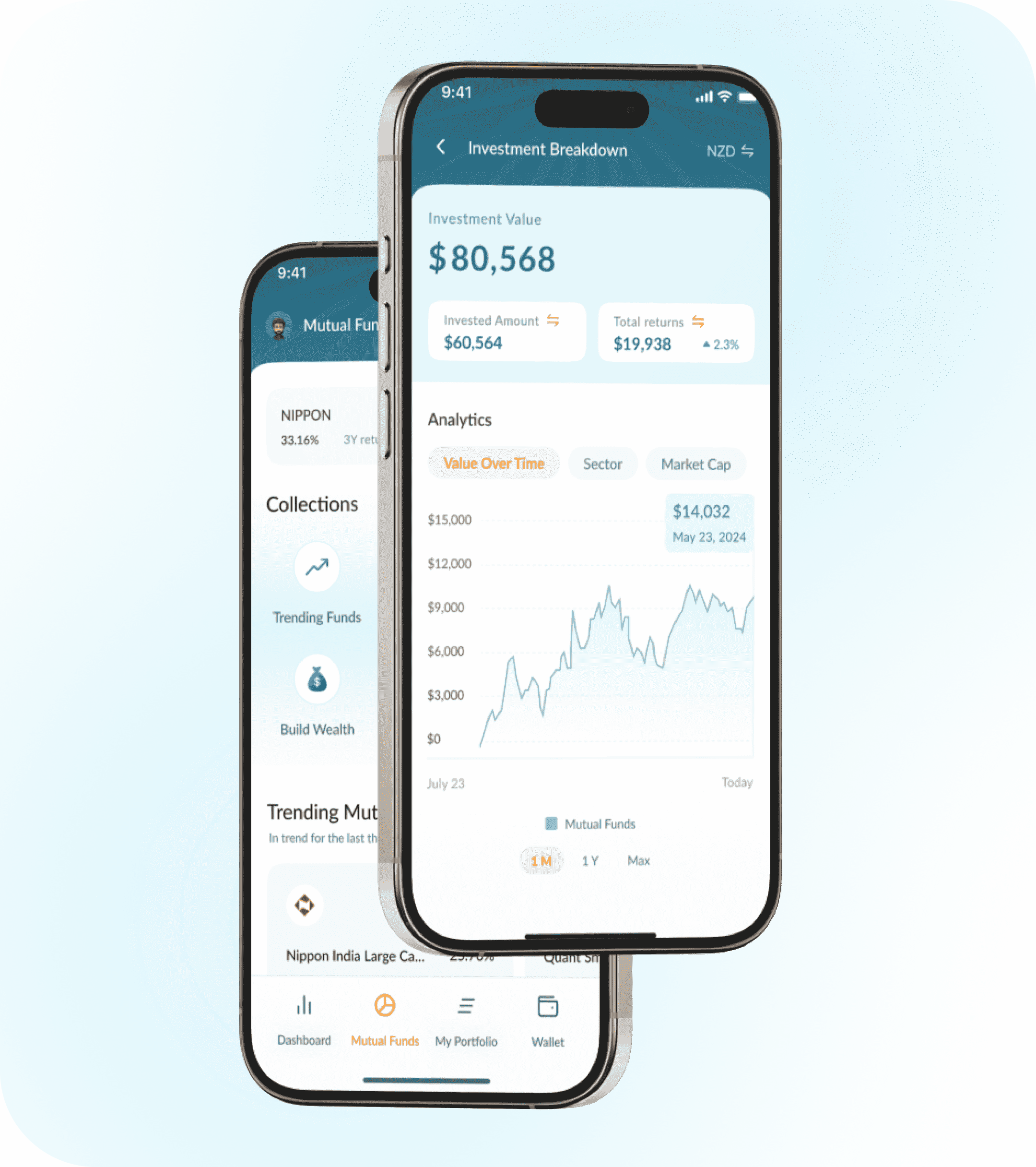
We designed Indus as a digital gateway for New Zealand residents to access the Indian market. Our goal is to simplify the operational hurdles of cross-border investing, with only a New Zealand driving licence or passport required for sign-up. After verification, the flow is simple: fund an in-app wallet directly from your NZ bank account, invest via SIPs or lump sums across 500+ Indian mutual funds, and withdraw back to NZD to your NZ bank account when you choose.
What Are Index Funds?
Index funds are funds that track an index. Think of an index as a rule-based list that represents a market or segment (for example, NZ shares, global shares, or bonds). You can’t invest in an index directly because an index is only a benchmark or measurement. The index fund is the vehicle that aims to mirror that index by investing in the underlying holdings (or a representative sample of them).
Because an index fund follows a set method rather than relying on a manager’s best ideas, it’s considered passive investing. That structure is a big reason index funds often have lower fees than actively managed funds, where professional fund managers actively pick investments and try to outperform the market an approach that can beat the benchmark, but can also lag it depending on decisions and conditions.
In New Zealand, you’ll commonly see index funds that track New Zealand share market indices, global equities indices, bond-market benchmarks, and all-in-one diversified index funds that blend shares and bonds in a single portfolio. For many New Zealand residents, the appeal is simple: broad market exposure, transparent rules, and costs that are typically easier to keep under control over the long run.
Why Invest in Index Funds?
Broad diversification across New Zealand and global markets
Instead of relying on one company or one sector, index funds typically hold many investments across industries and geographies. That matters in a small market like NZ too. Global exposure can reduce reliance on what happens locally.
Lower fees compared to actively managed funds available in NZ
Fees quietly matter because they compound over time. Passive/index funds often cost less because they do not pay for frequent research, trading, and manager discretion.
Many beginners prefer starting here because index investing focuses on market-like returns rather than trying to outperform the market. Over the long term, many active managers struggle to consistently beat their benchmarks after seeing the “keep it simple and low-cost” logic become compelling.
Suits long-term goals like retirement and wealth building
Some investors use index funds as part of long-term goals, given their broad diversification and structured approach.
Index Funds vs Actively Managed Funds in New Zealand
Beginners in New Zealand often compare index funds and active funds because the decision affects fees, outcomes, and effort, especially when investing for retirement or long-term wealth building.
The key difference: passive vs active management
Why this matters for retirement
Many long-term investment options are essentially diversified managed funds (often PIE structures). If your priority is long-term compounding, you should usually check:
total fees (fund + platform)
diversification (New Zealand + global)
risk level (growth vs balanced vs conservative)
tax treatment
Steps to Start Investing in Index Funds
For those exploring this route, the following steps outline our process for accessing Indian index funds from New Zealand:
1) Identify an “index target.”
Decide what you want the fund to track (broad market vs a specific segment), why to invest in index funds, and whether you’ll invest via SIP (regular) or lump sum (one-time).
2) Choose your route to access Indian index funds
New Zealand-based investors generally navigate one of two primary routes:
Route A: Direct NRI investing in India (bank + KYC)
Open an India-linked bank account that supports mutual fund investing
Complete KYC with a SEBI-registered intermediary (KYC form + required documents).
Prepare the documents mentioned in the guide (including address proofs, photo, and passport copy), plus any required attestation and in-person verification (IPV).
Once KYC is done, select an index-tracking mutual fund and start investing.
Route B: NZ-first route via Indus platform
Verify using NZ ID (NZ driver’s licence or passport).
Deposit from your NZ bank account into the app wallet.
Invest (explore 500+ mutual funds from over 45 AMCs at Indus, and you can start an SIP or lump sum).
Withdraw to NZD back to your NZ bank account (they position it as “exit anytime” with no lock-ins).
NZ-based investors can also benefit from “0% tax in India” for Indian mutual funds under the India–NZ DTAA, managed through the platform.
Practical Tips for Beginner Investors in NZ
Regular investing: Some investors prefer making regular contributions rather than investing a large sum at once, particularly to reduce timing risk.
Keep a long-term mindset during volatility.
Market volatility is normal. Investors typically consider their time horizon and risk tolerance before reacting to short-term movements.
Conclusion
To invest in Indian index funds from New Zealand, you don’t need a complex strategy; you need a consistent one. And if part of your diversification includes India-focused exposure, Indus offers an NZ-first route to Indian mutual funds. Sign up with a NZ driver’s licence or passport, fund an in-app wallet from your NZ bank account, then invest via SIP or lump sum across 500+ Indian mutual funds and exit anytime.
INVESTING IN INDIA