4 Key Metrics to Evaluate Indian Mutual Funds
Looking to invest in Indian mutual funds from NZ? Here's what you need to check before putting your money in:
Quick Facts:
Indian mutual funds hit record USD4.2 billion inflows in May 2024
NZ investors can access funds through Indus
Direct plans have lower fees than regular plans
For NZ Investors:
Under NZ$50,000: Regular income tax applies
Over NZ$50,000: FIF rules kick in
Watch currency risk between NZD-INR
Here's the deal: The best fund isn't the one making headlines. Pick funds matching YOUR timeline and risk comfort, with solid 5-year returns and reasonable fees. Let's break down exactly what to look for.
Related video from YouTube
::: @iframe https://www.youtube-nocookie.com/embed/thOejbtcBjo
Why Track Fund Performance
Tracking fund performance is like having a GPS for your money. It shows you where your investments are going and helps you make better decisions.
Here's what tracking does for you:
The Indian mutual fund market is packed with options. SEBI made things clearer in February 2018 by switching to Total Return Indices (TRI) from Price Return Indices (PRI). Now you get the whole story of how a fund performs.
Watch These Numbers:
SEBI sets these rules for fund comparisons:
Equity funds? Compare with Sensex or Nifty
Short debt funds? Use 1-year T-Bill
Long debt funds? Look at 10-year Government securities
Here's the deal: Just because a fund did well before doesn't mean it'll keep winning. Markets move. Fund returns change. That's why you need to keep an eye on these numbers.
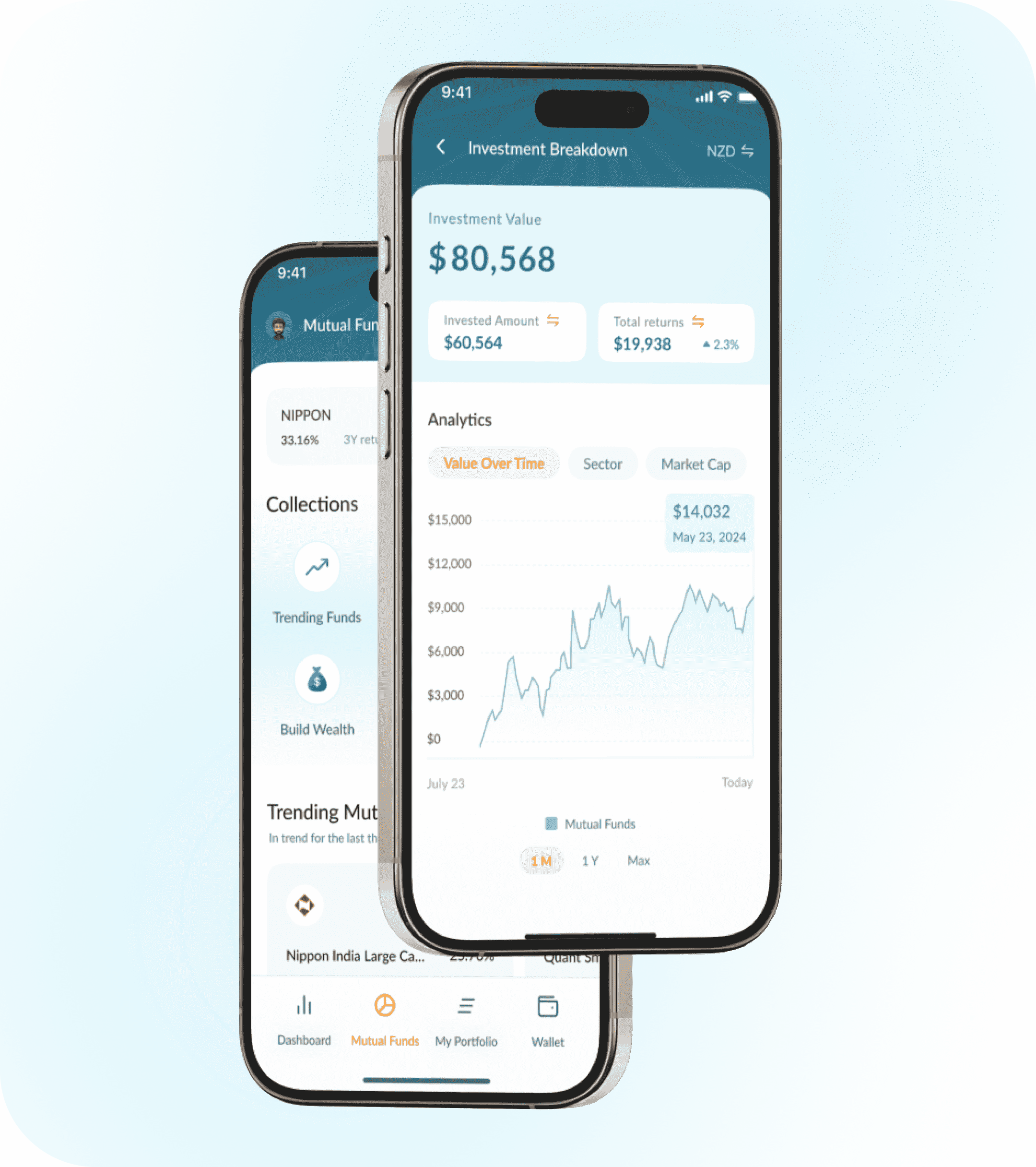
If you're an NZ investor using Indus, you can track Indian mutual funds right from your phone. It includes a dashboard for your investments.
Think of fund tracking like checking your bank balance - do it often, know where you stand, and act when needed. That's how you stay ahead in the investment game.
Fund Returns: Short and Long Term
Different time periods need different fund types:
Understanding Returns
Here's what each return number means:
Let's make this super clear:
Put ₹15,000 (c. NZD300) monthly into a fund. Keep at it for 15 years. Get 15% returns (CAGR). That's the "15_15_15 rule" - showing how time and returns build wealth.
What Matters Most
Look at both 3-year AND 5-year returns
Match returns with the right index (Sensex/Nifty for stocks)
Factor in fees and taxes
Remember: Past performance ≠ future results
For NZ investors on Indus: You can track these numbers across 100s funds. Pick your timeframe and compare.
2. Risk Level: How Much Can You Lose
Let's break down the numbers that show you how much your investment might swing up (or down) in Indian mutual funds.
Here's what different funds look like on the risk meter:
Two numbers tell you everything about risk:
Beta (Market Risk) Beta shows how wild the ride might get compared to the market:
Beta = 1: Your fund copies the market's moves
Beta > 1: Your fund makes bigger moves than the market
Beta < 1: Your fund makes smaller moves than the market
Here's what this means: If NIFTY 50 jumps 1% and your fund has a 1.5 beta, you're up 1.5%. But heads up - when markets drop, you'll drop harder too.
Standard Deviation (SD) SD shows how much your returns might bounce around. Let's say a fund shows:
Expected return: 15%
SD: 4
Your actual returns will likely land between:
Top end: 19% (15% + 4%)
Bottom end: 11% (15% - 4%)
What to Do With These Numbers:
Want to play it safe? Pick funds with beta under 1
Want bigger gains (and can handle bigger drops)? Look at funds with beta above 1
Check the SD - lower numbers mean less drama in your returns
Bottom line: Don't chase high-risk funds just because they might pay more. Pick something that matches your comfort level.
3. Returns vs Risk: Getting Your Money's Worth
Here's what you need to know about measuring performance in Indian mutual funds:
The Sharpe Ratio Makes Things Clear
The Sharpe Ratio tells you if you're getting enough return for the risk you're taking.
Here's what I mean:
Two funds give you 5% returns over 10 years. Fund A has a Sharpe ratio of 1.40. Fund B has 1.25. Go with Fund A - you're getting more return for each bit of risk you take.
Alpha: Your Fund Manager's Report Card
Let's compare two funds:
See that 3% alpha for Fund B? That means its manager is doing a BETTER job than Fund A's manager at beating the market.
Pick Better Funds
Here's what to do:
Start with the Sharpe Ratio - bigger numbers = better
Look for positive alpha - shows your manager knows what they're doing
Pick funds that match your timeline:
Need money soon? Debt funds
Investing for years? Think about equity
Know What You're Looking At
Give your fund 18-24 months before making big moves. But if returns stay flat while risk keeps climbing? Time to look elsewhere.
4. Fund Costs: What You Pay
Let's break down the costs of Indian mutual funds.
Two Main Costs You'll Pay
Direct vs Regular Plans: What's Different
Here's What This Means For Your Money
Take a ₹180,000 investment:
1.5% expense ratio = ₹2,700 yearly fee
2.25% expense ratio = ₹4,050 yearly fee
That's an extra ₹1,350 per year you could save.
How to Pay Less
Choose direct plans if you can manage investments yourself
Compare fees between similar funds
Check exit loads if you need short-term access
Look at bigger funds (₹5,000+ cr AUM) for lower fees
Here's the bottom line: A 1% fee difference might look small today. But over 10-20 years? That money could be growing in YOUR account instead of paying fees.
5. Fund Manager Skills: Extra Value Added
Here's how fund managers stack up against the market:
Key Performance Numbers
What Makes a Good Manager?
Alpha tells you if they're beating the market. For example: A fund that returns 17% when the market gives 12.5% (with beta 1.4) has an alpha of 1.1%. That's good.
Beta shows you risk levels:
Below 1 = Less market swings
Above 1 = More market swings
The best managers show strong 3-5 year returns across different market conditions.
Watch Out For These Problems
For NZ investors using Indus: Pick managers who've shown solid results for 5+ years in your investment style.
Here's the bottom line: Past results won't tell you everything about future performance. But these numbers help you spot managers who know how to handle both good and bad markets.
Tips for NZ Investors
Here's what you need to know about Indian mutual funds as an NZ investor:
Tax Rules You Need to Follow
How India Taxes Your Investments
Under the Double Taxation Avoidance Agreement (DTAA) between India and New Zealand, certain types of income, such as capital gains from the sale of mutual funds, may be taxable only in the country of residence. This means that if you're a New Zealand resident investing in Indian mutual funds through Indus, you will not be subject to tax in India on those investments.
Dealing with Currency Risk
Smart Moves for New Investors
Pick large-cap equity funds
Look at index funds
Choose funds running 5+ years
Check your mix every 3 months
Keep an eye on both NZD and INR - a fund up 15% in INR might look different in NZD when currencies shift.
Summary
Here's how to pick Indian mutual funds that work:
Performance Timeline That Matters
What Makes a Bad Fund?
Here's the thing:
The best fund isn't the one with the biggest returns. It's the one that:
Fits your timeline
Matches your risk comfort
Keeps fees in check
Works in both up AND down markets
Bottom line: Focus on funds that match YOUR needs, not just the ones making headlines.
FAQs
What is the best measure of a mutual fund performance?
The Sharpe ratio is the #1 way to measure how well a fund performs. Here's what it tells you:
Let me break this down with real numbers:
Fund A makes 12% with 10% ups and downs Fund B makes 10% with 7% ups and downs (Let's say the risk-free rate is 3%)
Fund A's Sharpe: 0.9 (12% - 3%) / 10%
Fund B's Sharpe: 1.0 (10% - 3%) / 7%
See what happened? Fund B makes less money but it's actually the better choice because it's less risky.
What is the best measure of risk for a mutual fund?
Beta shows you how wild the ride might get compared to the market:
How to evaluate mutual funds in India?
Here are the 5 things you NEED to look at: